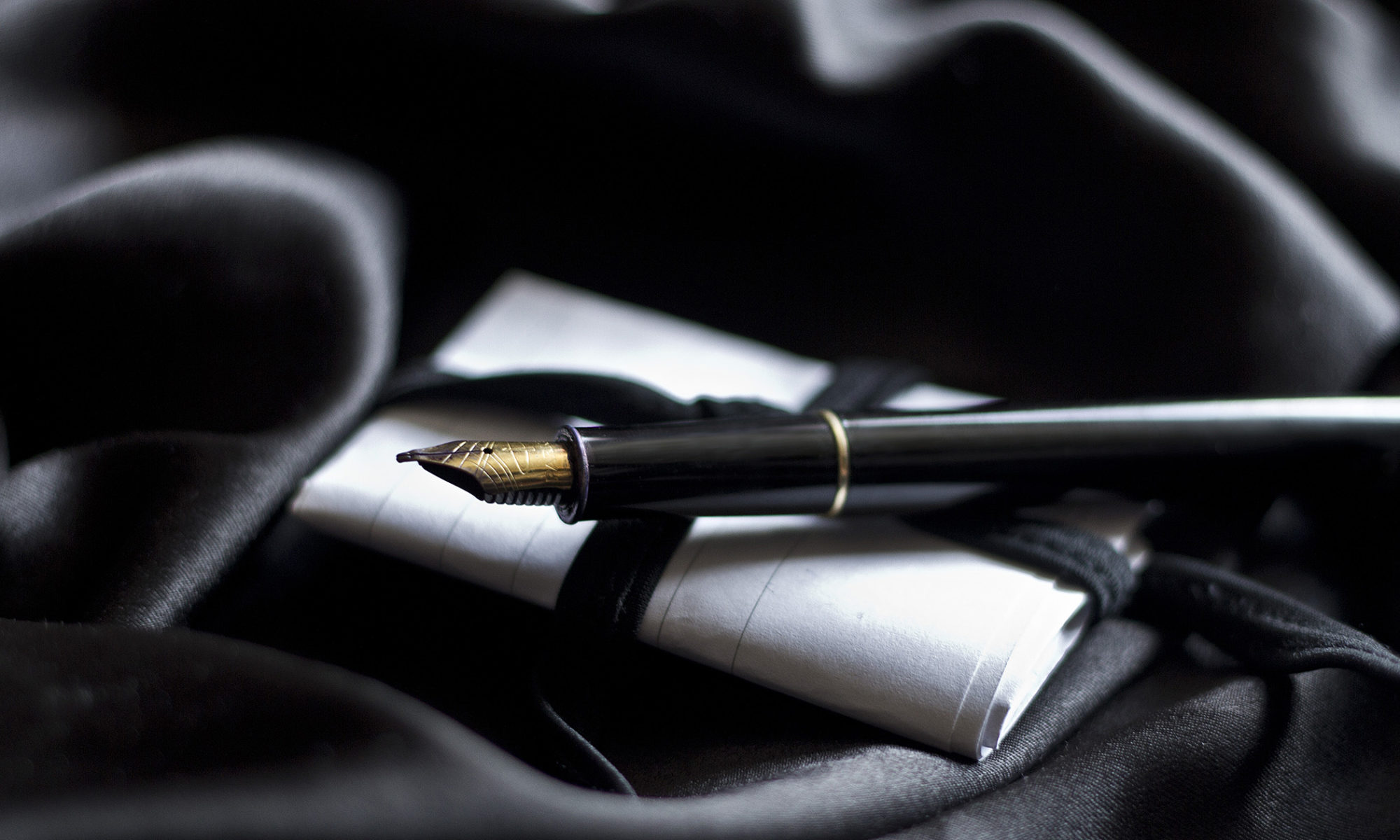
On Our First Valentine

This day arrives in softened gold, in quiet light that lingers long,
As though the earth itself had learned the measure of a gentler song.
No crimson flare nor trumpet’s cry attends this tender, chosen hour,
It comes instead like early spring unfolding petal, leaf, and flower.

The air lies warm upon the skin, though February waits outside,
With silver frost upon the fields and winter pressing far and wide.
No hurried pulse, no trembling storm confined within the waiting chest,
For in your nearness, strangely so, the season seems itself at rest.

Though bare the branch and pale the dawn beneath the year’s most fragile sun,
A gentler climate stirs within, as if some softer spring begun.
I had not thought that peace could dwell so close to something bright and new,
That calm might bear so clear a flame, yet never scorch the sky in view.

No vow is spoken to the wind, no promise carved in hurried art,
Yet something in the hush between has quietly altered where I start.
The world retains its shape and sound, its turning tide and shifting air,
Yet moves with kinder harmony when I discover you are there.

If this be what the first of days devoted thus to love may bring,
Not fevered blaze nor reckless fire, but warmth that makes the spirit sing,
Then let it come without acclaim, without the need for grand display,
For in this quiet, golden hour, my heart has found its place to stay.

And should the seasons turn again with sterner winds across the land,
I shall recall this quiet hour, though few may truly understand,
How light did not demand the sky, nor seek the world’s command,
It simply touched till all within grew steady at its hand.

The Shape I was Not

Oh, snow. Tell me your secret. Tell me how you learned to fall like that, slowly and intact, a s if the world itself had paused for you. We began in the same place, you and I, held together above all that is noticed, indistinguishable until the moment we were released. I remember that sameness still.

Somewhere on the way down, you were shaped into something the world could love. The air turned kinder in your favour, granting you the time I was never given. You learned how to hold yourself together, how to arrive whole. By the time you reached them, you were already beautiful, as if becoming had cost you nothing.

When you appear, faces lift without thought. Hands open instinctively, the way they do for things already trusted. You settle softly into hair and sleeves, into the quiet margins where attention lingers longest. You are permitted to remain. You are forgiven even when you slow the world, even when you make it harder to move through. Children surrender to you without fear, lying back and letting you take their shape.  When I come, those same children are called inside. Voices sharpen. Doors close. Laughter thins to nothing. I learn, again and again, what it is to be the reason something beautiful ends. I watch them love you without effort, and I despise myself for wondering why it comes so easily to you.

I follow, and the air does not slow. I am pulled apart before I know what shape I am meant to keep. I fall because I must, not because I am welcomed. I arrive everywhere, touching too much, staying too long. I am necessary and unloved, felt only in excess, remembered only in complaint. You are missed. I am escaped

Still, I watch you rest upon the world, unafraid of being seen. I imagine myself lighter, quieter, cooled at the right moment. I imagine holding together long enough to be chosen. If I could learn your way of falling, I would. For somewhere in me lives the foolish belief that if I studied you closely enough, if I learned the exact manner of your descent, I might become you. That the difference between us was not decided at our beginning but granted mercifully along the way. That there was a moment, only one, when I might have been shaped differently, and was not.

If you possess a secret, snow, I am listening.
If you were given something I was denied, tell me its name.
I am so very tired of falling as I am.

Yours,
Rain

When Love Begins Quietly

It came like the tide against an unexpecting shore,
Soft at first, then certain,
Tracing salt and shimmer into places
long since declared untouched.

It hummed beneath the ribs,
A secret language of pulse and breath,
Teaching silence how to sing again.

It arrived like moonlight through a half-open door,
Brushing dust into silver,
Teaching forgotten rooms
The taste of light again.

It breathed into fragments,
The flutter of wings against glass,
The trembling of a name
Before it is spoken.

It grew in the hush between hours,
In the soft persistence of morning,
In the warmth that lingers after your hand has gone.

It wrote itself in small mercies,
In candle smoke and drifting rain,
In the quiet courage of two hearts learning the same rhythm.

Until everything, even the quiet became love.  

The Silent Man

The silent man came to me today
Said he had a lot to say
Said he would only speak to me
He needed to speak urgently

He already knew my name
Knew what I was going to say
Said that we are the same

He’s got to tell me all he knows
Said he knew every pole
But didn’t know, which way to go

He would make me feel so free
He said that they had mentioned me

He said,
“Don’t listen to a word they say.
Stick with me and you’ll be okay”
Said they wouldn’t understand,
With a raised voice from the Silent Man

Now I see him everywhere
Both of us in despair
Said he couldn’t trust me now
I must do
What he will choose
For the Silent Man.

Migration in the News

migrant boat

Has anyone else noticed how much migration has been in the news recently? I certainly have; not to mention that my entire introduction to geography A-level was on the subject – the word ‘crisis’ often accompanying it. As a young adult myself, these kind of news stories always spark questions in my mind. It’s left me wondering whether migration is actually a crisis and why has it only become so in recent years?

If you really think about it, migration has been around for years, dating back to even the time of Jesus who was a refugee in Egypt as a child. It would be very difficult to argue that migration has only become a human occurrence in recent years when there’s historic evidence that suggests otherwise. However, I agree it’s impossible not to notice that in the last 100 years, the levels of international migration have increased at ridiculous rates. In the last decade alone, the number of international migrants has increased by nearly 60 million more people.

Now I’m left wondering why. What has happened in the last 100 years that could’ve caused this spike? Globalisation. What does this mean? It means the interconnectedness of different regions in the world. Simply put: our world is one metaphorical community. While being a nice concept, I believe globalisation is largely responsible for our so-called migration ‘crisis’.

I’m a legal immigrant. I lived in Ethiopia for 8 years as a third-culture kid. My family helped the people over there; however, we are all ethnically English. Now I wouldn’t really call this type of migration a ‘crisis’. However, upon our return to England, we had many of our Ethiopian friends repeatedly asking us to declare them refugees in hope they can gain citizenship in our country. There’s actually a term for these types of people – economic refugees, migrant workers who falsely claim reasons for migration is due to persecution and not personal ambition. I find it quite sickening: the thought that people will pose as victims to try to gain access to better countries, an event I doubt would come about without the effects of globalisation.

Honestly, this is a topic I struggle with. I imagine a battle between morals and law about migration. I fully believe that people from poorer countries deserve a better life, that refugees deserve safety, and that people should be allowed to want the best for their families. However, I also understand that the UK is a small island and cannot physically hold all the migrants that try to cross the English Channel as well as the fact that there are specific legal ways to migrate to other countries. It’s estimated that at least 45,728 people are believed to have crossed the Channel to the UK in small boats in 2022, an increase of more than 17,000 on the 28,526 who arrived in 2021. I guess this is where it becomes a ’crisis’ and I can see it getting worse in the future.

About Rosie

Flower bed pen

Before I really start my blogging journey, I wanted to introduce myself. I’m Rosie and while I’m only 16 I have a lot to say and already experienced so much in my life. For starters, I was recently diagnosed with autism – only earlier this year; however, not being diagnosed for the most part of my life has not stopped me from always trying my best.

I spent the first half of my life in Ethiopia where I experienced cross-cultural living and attended a Christian mission school. For the last eight years, I have attended a public Catholic school in Canterbury. These opportunities have given me a tolerance for different views and an understanding on how our culture affects our beliefs.

I’ve always had a passion for English which has led me to become a three-time published author in Young Writer’s competitions as well as always being top of my English classes. I’ve developed many literacy skills which has piqued my interest in reading a broad range of genres.

As a youth I hope that I can bring opinions and colours to people’s lives that they may not have noticed or considered before due to vast differences between my schooling and growing up than those of older generations. I hope I can keep you interested!

Cookies

PHPSESSID
This cookie is native to PHP applications. The cookie is used to store and identify a users’ unique session ID for the purpose of managing user session on the website. The cookie is a session cookies and is deleted when all the browser windows are closed.

From Cookie Scanner

Narrative Writing: Introduction and Guidelines


Introducing Elsa and Debbie: Guiding Your Narrative Writing Journey in Medical Documentation

Unlock the power of effective narrative writing with our cutting-edge course designed exclusively for Medical Writers. Join Elsa and Debbie as they spearhead a pioneering narrative writing course tailored to meet the unique needs of medical professionals in the field. If you’re keen on enhancing your skills in crafting clear and concise adverse event stories for regulatory documents, you’re in the right place.

At the heart of our program lies the commitment to provide you with the essential tools to excel in narrative writing within the medical domain. We understand the critical importance of accurate and coherent adverse event reporting, and our course is meticulously curated to address this requirement.

By reaching out to us, you take the first step towards a bespoke learning journey. Our experts will work closely with you to structure a course that aligns perfectly with your needs and goals. Whether you’re an individual medical writer or part of a team, we can cater to your specific requirements.

Course Highlights:

  1. Comprehensive Regulatory Insight: Gain a deep understanding of regulatory guidelines that govern narrative writing for medical documentation. Stay up-to-date with the latest standards to ensure your narratives meet the highest compliance levels.
  2. Mastering Pharmacovigilance Reporting: Navigate the intricacies of how pharmacovigilance departments capture safety data. Learn to translate complex information into engaging and informative narratives.
  3. Navigating Essential Sources: Discover the key sources you need to create compelling narratives. From medical reports to research papers, we guide you in sourcing and integrating information effectively.
  4. Quality Assurance and Submission Readiness: Elevate your narratives to ‘ready for submission’ standards. Explore techniques to ensure the quality, accuracy, and completeness of your narratives before they reach regulatory authorities.

Embark on this enriching journey to refine your narrative writing skills under the guidance of seasoned professionals. Elsa and Debbie bring a wealth of experience to the table, making this course an invaluable opportunity for every medical writer aspiring to excel in their craft.

Don’t miss the chance to revolutionize your narrative writing capabilities. Contact us today to take the first step toward a tailor-made learning experience. For a glimpse of what awaits you, explore our introductory slides below. Your path to mastery in medical narrative writing begins here.

Book Versus Film

Welcome to Lioness

The one thing that has always annoyed me about films is that even if a film is exceedingly popular the books are often neglected. It is very common for truly fascinating books to be converted into a film series such as Lord of the Rings and Harry Potter. However, films just don’t capture the same magic that books have. Maybe they’ll cut your favourite scene, or they won’t quite portray it in the way you wanted. I’ve always been sorely disappointed when watching the films of my favourite books.

Books make you work

I believe that the main issue about portraying books in a film is the imagination factor. When you read a book, the pictures in your head is what keeps the story flowing and it’s like you are in a different world. They leave more open to imagination, you see it the way you want to see it rather than the way the producers expect you to see it. This process is also important for the development of young minds (https://whytoread.com/imagination-why-reading-makes-you-more-creative/ ). Words just captivate things far better than the pictures ever will. With books, the reader has the tendency to lose themselves in the world the author has created, particularly with great works of fiction. It’s like you become one of the characters in the book. This is how attachment grows. I personally find it hard to engage the same way with films as I do with books. The story moves far too fast and sometimes I must rewind it just so I can understand what’s going on. It’s over before it’s hardly even started. Granted, that’s nice when one wants to simply finish the story as soon as possible, but isn’t it much nicer to savour the experience, to take in every detail?

A richer experience

I often find myself having to pause what I’m watching in order to explain the intricacies of a plot to someone who has not read the book. Everything just clicks into place when reading a book. In addition, reading has many benefits including improving English skills and mental stimulation (https://www.lifehack.org/articles/lifestyle/10-benefits-reading-why-you-should-read-everyday.html). So, in conclusion, reading has far more benefits than motion pictures so why not stick to the traditional form of entertainment?

Alice Writes: Is the Printed Word Dying

Printed books are dying. That is what lots of people are saying in this growing technological age. Younger generation are not interested in physical books, they would much rather read them online. This is a lie. Yes, the amount of people reading online books is growing vastly as more resources become available to us but that does not mean that the traditional book is dying out. Like all products, the sales of book types fluctuate.

Are e-books a threat?

For a little while it seemed that e-books were going to dethrone the traditional printed book. However, in 2018 digital book sales actually declined by 2% and the print book sales increased by 1.3%. This heavily suggests that we are moving back to physical books within the book sale market (https://www.printweek.com/print-week/news/1165127/printed-books-turn-a-new-leaf-as-digital-sales-decline). As a young person who loves reading, Ifind that digital books are a fantastic invention: who wouldn’t love hundreds of books tucked away in a small device which can just slip into your back pocket and be transported anywhere? But that does not mean that I just neglect print books entirely.

The essence of the physical book

When discussing books with those in my class I have often found that most of us prefer to have a printed copy of the book. There is something about physically holding and turning the pages of a book that just can’t be replicated with a digital version. Also the smell of books, both old and new, is comforting. So no, printed books are not dying, they are stronger than ever.